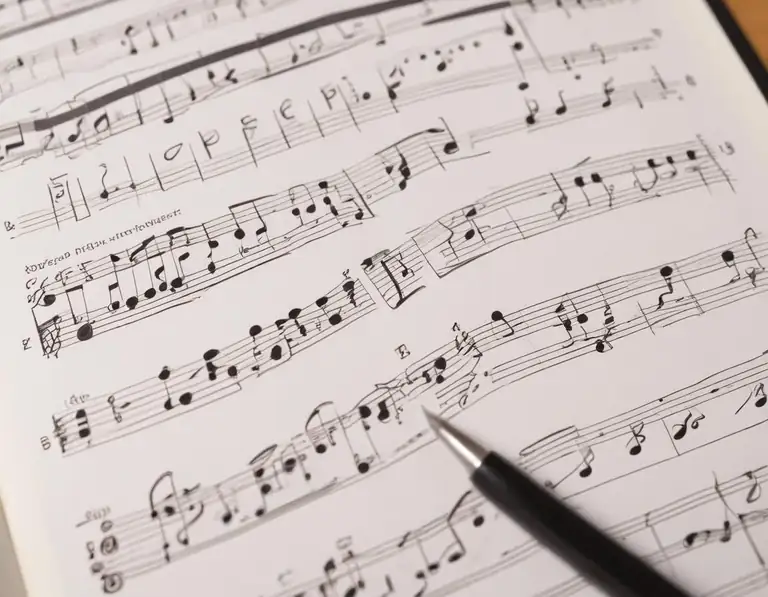
music theory
music theory
music studies
Learn music theory with free cards in 30 seconds.
10 minutes a day can add up to 3,000 words a year. Spaced flashcards bring each word back when it is time to remember it.
music theory fits your vocabulary level. Check your level if you are not sure.


How many words can you learn in a year?
If you learn 8-10 new words a day and review them regularly with flashcards, you can cover about 3,000 words in a year.
ZapomniEnglish brings words back at the right time: difficult words appear more often, familiar words less often.
Not sure what pace to start with? Check your vocabulary level and we will suggest words for your level.
We count words you add to learning and review regularly. Active use grows gradually and depends on practice.
| Pace | Per day | Per year | Best for |
|---|---|---|---|
| Easy | 3 words | ≈ 1,100 words | starting without pressure |
| Balanced | 5 words | ≈ 1,800 words | steady growth |
| Recommended | 8 words | ≈ 2,900 words | around 3,000 words a year |
| Fast | 10 words | ≈ 3,650 words | visible vocabulary growth |
| Intensive | 15 words | ≈ 5,500 words | strong motivation |
music theory with Russian translation
music theory usage examples
Занятия по теории музыки помогли ему понять последовательности аккордов.
The music theory class helped him understand chord progressions.
Студенты по теории музыки часто изучают, как работает гармония.
Students in music theory often learn how harmony works.
Learn by topic
music theory belongs to the topic "Subjects". Start with a short 7-word set so the word is easier to remember in context.
music theory synonyms
What's the difference between music theory / musicology / music history / musical analysis / harmony / counterpoint
The primary term for the study of musical structure and principles; identical in meaning to the headword.
She studies music theory at university.
Она изучает теорию музыки в университете.
An academic discipline covering history, cultural context and research into music; broader and more research-focused than music theory.
She studied musicology, focusing on 18th-century opera rather than music theory.
Она изучала музыковедение, сосредоточившись на опере XVIII века, а не на теории музыки.
Focuses on the historical development of music and styles; emphasis differs from the rule-based study of music theory.
His degree is in music history, so he studies composers and periods rather than harmony rules.
Его диплом по истории музыки, поэтому он изучает композиторов и эпохи, а не правила гармонии.
A practical method of studying pieces (form, themes, harmony); a component of music theory but more methodological and applied.
Musical analysis revealed the recurring motif in the symphony.
Музыкальный анализ выявил повторяющийся мотив в симфонии.
A subfield of music theory focused on chords and their progressions; more specific than 'music theory'.
He studied harmony to improve his songwriting.
Он изучал гармонию, чтобы улучшить написание песен.
A specialized area studying the interaction of independent melodies; a narrower, technique-oriented part of music theory.
The choir practiced counterpoint exercises to improve their blending.
Хор практиковал упражнения по контрапункту, чтобы улучшить звучание вместе.
The branch of theory focusing on tonal (major/minor) systems; a narrower specialization within music theory.
Tonal theory explains functional harmony in many classical pieces.
Тональная теория объясняет функциональную гармонию во многих классических произведениях.
A technical method for analyzing atonal music (using pitch-class sets); a specialized tool rather than the general study of music.
He used set theory to analyse the 20th-century piece.
Он использовал теорию множеств для анализа произведения XX века.
Practical area focused on developing ear abilities (intervals, harmony recognition); part of training rather than abstract theory.
The aural skills course trains students to identify chords by ear.
Курс по развитию слуха учит студентов распознавать аккорды на слух.
The system of writing music (musical notation); a tool/language used within music theory, not a full synonym for the discipline.
Good notation helps performers interpret the score precisely.
Хорошая нотация помогает исполнителям точно интерпретировать партитуру.
What's the difference
More related word breakdowns
Short comparisons help you choose the right word by meaning, context, and typical examples.

В чем разница в английском между carry, wear, tote и lug
Carry — нести или иметь при себе, wear — носить на теле, tote — таскать с собой, lug — тащить тяжёлое с усилием.

В чем разница в английском между whole, entire, complete и intact
Разница между whole, entire, complete и intact: целое, весь объем, завершенность и сохранность без повреждений.

В чем разница в английском между choose, pick, select и opt for
Разница между choose, pick, select и opt for: обычный выбор, разговорный выбор, выбор из списка и осознанное предпочтение.
Related words and lists for music theory
Lists












How to pronounce music theory and what this word means
music theory translation: теория музыки. This page includes translation, pronunciation, transcription, audio, usage examples and related words.
how to pronounce music theory
/ˈmjuːzɪk ˈθɪəri/
music theory translation
теория музыки
music theory examples
The music theory class helped him understand chord progressions.
music theory transcription
/ˈmjuːzɪk ˈθɪəri/, /ə ˌmjuːzɪk ˈθiri/
How this dictionary entry is reviewed
ZapomniEnglish prepares dictionary data automatically, then the editorial workflow checks high-frequency words, top lists, and pages that already receive search impressions first.
Questions about this word
music theory meaning: what does it mean?
music studies
music theory pronunciation: how do you pronounce it?
music theory is pronounced as /ˈmjuːzɪk ˈθɪəri/. Audio is available on this page when the word has a recording.
music theory definition and sentence examples: how is it used in a sentence?
The music theory class helped him understand chord progressions. Translation: Занятия по теории музыки помогли ему понять последовательности аккордов.
Is music theory part of Subjects vocabulary?
Yes, music theory (теория музыки) can be learned in the Subjects topic. This semantic link helps build related word lists and topic-based practice.
Is music theory part of Study and Work vocabulary?
Yes, music theory (теория музыки) can be learned in the Study and Work topic. This semantic link helps build related word lists and topic-based practice.
Learn music theory in your vocabulary
Add this word to practice, repeat it with audio, examples and your own word lists.